Introduction
American politics has always had room for protest movements, but every so often one arrives with the force of a thunderclap. The Tea Party movement was one of those moments. It did not simply appear as a political club with neat rules and a polished brand. It erupted out of frustration, anxiety, and a belief among many Americans that the federal government had become too large, too expensive, and too distant from ordinary citizens. In that sense, the Tea Party was less like a carefully built machine and more like a pressure valve bursting open.
To understand the history of the Tea Party movement in America, we have to look beyond slogans and campaign signs. We need to ask a bigger question: why did this movement resonate so deeply with so many people in such a short time? The answer lies in a mix of economic fear, political mistrust, constitutional language, media amplification, and the power of grassroots activism. The movement became one of the most important conservative political forces of the early 21st century, especially after the 2008 financial crisis and the early years of Barack Obama’s presidency. Its influence stretched far beyond a few protests and election cycles, leaving fingerprints all over modern American conservatism.
What the Tea Party Movement Was at Its Core
At its core, the Tea Party movement was a conservative populist uprising. That sounds academic, but the meaning is simple. It was conservative because it emphasized limited government, lower taxes, reduced federal spending, and a strict reading of the U.S. Constitution. It was populist because it presented itself as a rebellion of ordinary Americans against political elites in Washington, powerful institutions, and what supporters saw as out-of-touch leadership from both major parties.
Many supporters believed the country was drifting away from its founding principles. To them, the federal government was no longer acting like a referee staying within the rules. It had become a player taking over the whole field. If you imagine the American political system as a house, Tea Party activists felt the government had not just rearranged the furniture. It had started knocking down walls without asking the people who lived there.
Understand the foundations, values, and civic role behind the Tea Party movement to better engage with modern grassroots activism.
Economic anxiety after the 2008 financial crisis
The movement emerged in the shadow of the 2008 financial crisis, one of the worst economic collapses in modern American history. Banks failed, unemployment rose, home values dropped, and many families felt as though the financial system had betrayed them. In this atmosphere, public trust weakened. People were scared, angry, and looking for someone to blame.
Anger over taxes, bailouts, and federal spending
That anger intensified when the federal government responded with bailouts, stimulus measures, and intervention in the housing market. For Tea Party supporters, these policies represented a dangerous expansion of government power. They saw Washington rescuing large institutions while everyday Americans struggled. That sense of unfairness became fuel. After all, who likes being told to pay for a fire they did not start?
The Origins of the Tea Party Movement
The symbolic link to the Boston Tea Party
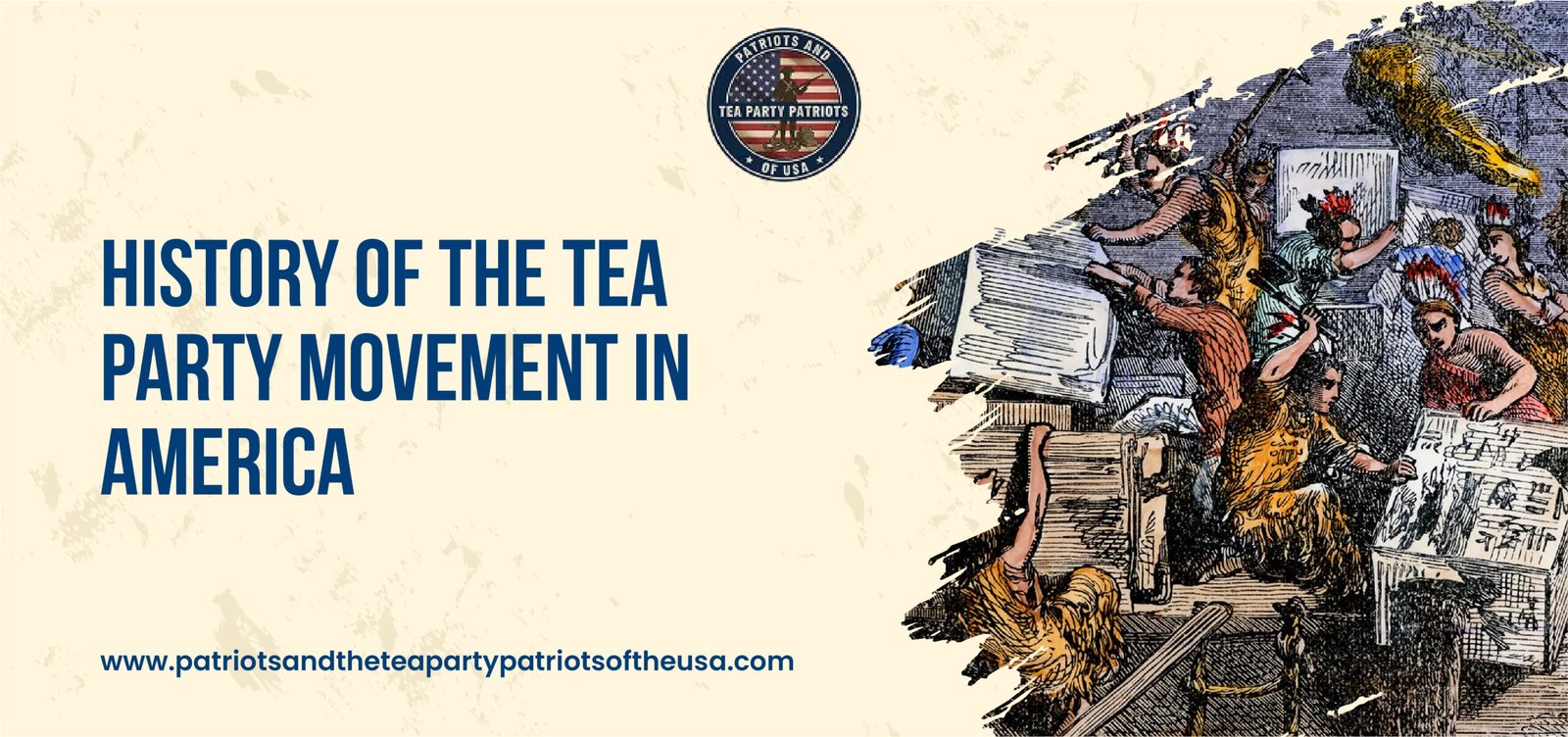
The movement deliberately borrowed its name from the Boston Tea Party of 1773, one of the most famous acts of protest in American history. That historical reference was not accidental. It gave the movement an instant patriotic frame. By invoking the original Boston Tea Party, activists connected themselves to the idea of rebellion against unjust government power and taxation. It was a strategic piece of political storytelling, and it worked.
Rick Santelli’s 2009 rant and the spark of a movement
The modern Tea Party’s most widely recognized spark came on February 19, 2009, when CNBC commentator Rick Santelli criticized government mortgage relief efforts from the floor of the Chicago Mercantile Exchange. During his on-air remarks, he called for a “Chicago Tea Party,” and the phrase caught fire. What might have been a passing media moment became a rallying cry. Sometimes history turns on speeches made from grand stages. Sometimes it turns on one frustrated broadcast clip at exactly the right moment.
The role of local protests and grassroots energy
Soon after, protests began appearing across the country. Tax Day demonstrations in 2009 gave the movement national visibility. Though national advocacy groups and media figures helped amplify the message, much of the early energy came from local organizers. People gathered in town squares, outside government buildings, and at public meetings. Homemade signs, constitutional references, and anti-spending slogans became defining images of the movement. This local energy helped the Tea Party present itself as a citizens’ revolt rather than a top-down political project.
The Beliefs and Messages That Defined the Movement
Limited government
The Tea Party’s central message was that government had grown too big. Supporters believed Washington was inserting itself into too many areas of American life. They wanted fewer regulations, less bureaucracy, and less centralized power. In their view, the federal government should do less and leave more decisions to individuals, businesses, and states.
Lower taxes
Taxes were another major focus. The movement argued that high taxes and rising public spending punished productivity and weakened economic freedom. This was one reason the “Tea Party” label was so effective. It tied modern tax protest to a deeply familiar American revolutionary symbol.
Constitutional originalism
Tea Party supporters often invoked the Constitution, especially the idea that it should be interpreted according to its original meaning. The Constitution was not treated merely as a legal document. It became a moral compass and political weapon. At rallies, pocket Constitutions were common, and references to the Founders gave the movement both legitimacy and emotional appeal.
Opposition to federal overreach
Whether the issue was healthcare, debt, banking regulation, or stimulus spending, the movement framed its opposition through the language of government overreach. It was not just disagreement over policy details. It was a broader warning that freedom itself was being squeezed. That framing helped the movement stay emotionally powerful, even when its coalition included people with different priorities.
How the Tea Party Grew So Quickly
Conservative media and digital organizing
The Tea Party rose at a moment when conservative media had enormous influence. Cable news, talk radio, blogs, and online forums gave the movement immediate reach. Activists did not have to wait for traditional institutions to validate them. They could organize, communicate, and spread messages directly. That mattered. In earlier decades, a movement might need years to build a national profile. The Tea Party gained one in months.
Town halls, rallies, and public demonstrations
Public demonstrations also helped transform scattered frustration into visible power. Town hall meetings during debates over healthcare reform became especially intense. Tea Party supporters showed up loudly, consistently, and strategically. They made themselves impossible to ignore. In politics, visibility often creates legitimacy. When voters see crowds, they assume something real is happening.
The appeal to ordinary voters
The movement also appealed to people who felt forgotten. Many supporters saw themselves as taxpayers, workers, retirees, veterans, or small business owners who played by the rules but were being pushed aside by political insiders. The Tea Party spoke in a plain, angry, emotionally accessible language. It did not sound like a graduate seminar. It sounded like a neighbor saying, “Enough is enough.”
The Tea Party and the Republican Party
Alliance and tension inside the GOP
The Tea Party did not create the modern Republican Party, but it changed it. At first, many Republican politicians welcomed the movement because it energized conservative voters. Yet the relationship was never entirely comfortable. Tea Party activists often distrusted establishment Republicans almost as much as Democrats. To them, many GOP leaders talked about small government during campaigns but compromised once in office.
Primary challenges and party disruption
This tension showed up in primary elections. Tea Party-backed candidates challenged incumbent Republicans they considered too moderate or too willing to deal with Washington as usual. This put pressure on the party from the right and reshaped internal Republican debates. The message was clear: being conservative in theory was no longer enough. The base wanted confrontation.
The 2010 midterm elections
The movement’s biggest electoral breakthrough came in the 2010 midterm elections. Republicans made major gains in the House of Representatives, and Tea Party-backed candidates won several important races. The movement did not control every Republican victory, of course, but it undeniably helped drive enthusiasm, turnout, and ideological clarity within the party. The 2010 elections proved the Tea Party was more than a protest brand. It was an electoral force.
Major Moments in Tea Party History
The 2009 tax protests
Tax Day protests in April 2009 gave the movement national visibility. These events helped connect local groups into a recognizable national trend. They also showed that the anger was not isolated to one region or one social class.
The battle over the Affordable Care Act
As the Obama administration pushed healthcare reform, the Tea Party became one of its fiercest opponents. The Affordable Care Act became a symbol, in Tea Party rhetoric, of government expansion and bureaucratic control. Town halls turned combative, and healthcare debates helped solidify the movement’s identity.
The 2010 election wave
The 2010 wave election marked the Tea Party’s peak as a mobilizing political force. It showed how a protest movement could move from the streets to the ballot box without losing its emotional edge. That is not easy. Many movements excel at outrage but fail at organization. The Tea Party managed both, at least for a time.
The 2013 government shutdown
By 2013, Tea Party influence was visible in high-stakes confrontations over federal spending and the Affordable Care Act. The government shutdown that year became one of the clearest examples of how the movement’s confrontational style had migrated into national governance. Critics blamed the Tea Party heavily for encouraging brinkmanship, while supporters saw the conflict as proof that someone was finally willing to fight.
Criticism and Controversy
Accusations of extremism
From the beginning, critics argued that the Tea Party encouraged ideological rigidity and treated compromise as weakness. They said the movement made governing harder by rewarding confrontation over negotiation. This criticism grew stronger as Washington became more polarized.
Questions about race and rhetoric
The movement also faced criticism over rhetoric and symbolism, especially during the Obama years. Some observers argued that racial resentment played a role in at least part of the movement’s energy, while supporters insisted their objections were about policy, constitutional limits, and fiscal issues rather than race. This debate became one of the most contested aspects of Tea Party history.
Concerns about policy depth and internal contradictions
Another criticism was that the movement’s message could be broad but vague. It was highly effective at saying “no,” but less consistent when explaining what a full governing alternative would look like. Some supporters wanted spending cuts across the board, while others defended certain popular government programs. In that sense, the movement sometimes resembled a family united at dinner by what it disliked, not by a perfectly shared plan for the future.
The Decline of the Tea Party as a Distinct Brand
Leadership fragmentation
Like many fast-moving political movements, the Tea Party struggled with coherence. There was no single leader, no universally trusted organization, and no shared strategy for the long term. That grassroots quality had been a strength early on, but over time it also became a weakness.
Mainstreaming of its ideas
As years passed, many Tea Party ideas were absorbed into the broader Republican mainstream. Once a movement’s ideas become standard party language, the separate brand can fade. In a strange way, success can erase the label that produced it.
Shift into broader populist conservatism
The Tea Party as a distinct name lost momentum, but its style and themes did not disappear. Its distrust of elites, hostility to establishment politics, emphasis on national identity, and confrontational energy flowed into later conservative populism. In that sense, the Tea Party did not so much vanish as mutate. It changed shape and moved into new containers.
The Tea Party’s Lasting Legacy
Influence on Republican politics
The Tea Party pushed the Republican Party further toward anti-establishment conservatism and sharpened internal demands for ideological purity. It changed what Republican voters expected from their leaders. Strong rhetoric, visible resistance, and constitutional messaging became even more central to conservative politics.
Impact on grassroots activism
The movement also demonstrated the continuing power of grassroots organizing in the digital age. It showed that a political uprising could begin with local frustration, gain national media attention, and quickly reshape party politics. For students of American democracy, that is one of the most important lessons of all.
Connection to later conservative movements
Perhaps the Tea Party’s deepest legacy is that it foreshadowed later developments in American conservatism. Its anger at elites, suspicion of institutions, and populist tone helped prepare the ground for future political realignments. Even people who never joined a Tea Party rally still live in a political environment partly shaped by its rise.
Conclusion
The history of the Tea Party movement in America is the story of a political rebellion born from crisis, amplified by media, and sustained by deep public frustration. It emerged after the 2008 financial collapse, drew symbolic power from the Boston Tea Party, and became a major force in conservative politics through its defense of limited government, lower taxes, and constitutional language. Along the way, it reshaped elections, pressured the Republican Party, fueled national debates, and attracted both passionate support and sharp criticism.
Even though the Tea Party no longer dominates headlines as it once did, its influence remains woven into modern American politics. That is what makes the movement historically important. It was not merely a short-lived protest trend. It was a turning point. And when we look at today’s conservative activism, political polarization, and anti-establishment energy, we can still hear echoes of the Tea Party years.
FAQs
What started the Tea Party movement?
The modern Tea Party movement was sparked in 2009, especially after CNBC commentator Rick Santelli criticized government mortgage relief efforts and called for a “Chicago Tea Party.” His remarks landed during a time of deep public anger over the financial crisis, bailouts, and federal spending.
Was the Tea Party movement truly grassroots?
It had strong grassroots elements, especially in its local protests and organizing, but it also benefited from national media attention and support from established conservative networks. So the honest answer is that it was grassroots, but not purely spontaneous.
What did the Tea Party stand for?
The movement generally stood for limited government, lower taxes, reduced federal spending, and a strict constitutional interpretation. Supporters often framed their activism as resistance to government overreach.
Why did the Tea Party lose momentum?
It lost momentum because of leadership fragmentation, internal disagreements, criticism over tactics, and the fact that many of its ideas became absorbed into mainstream Republican politics. The brand faded, even as its influence remained.
Did the Tea Party change American politics?
Yes, significantly. It influenced the Republican Party, energized conservative voters, shaped the 2010 midterms, and helped normalize a more confrontational and populist style of politics that continued long after the movement’s peak.